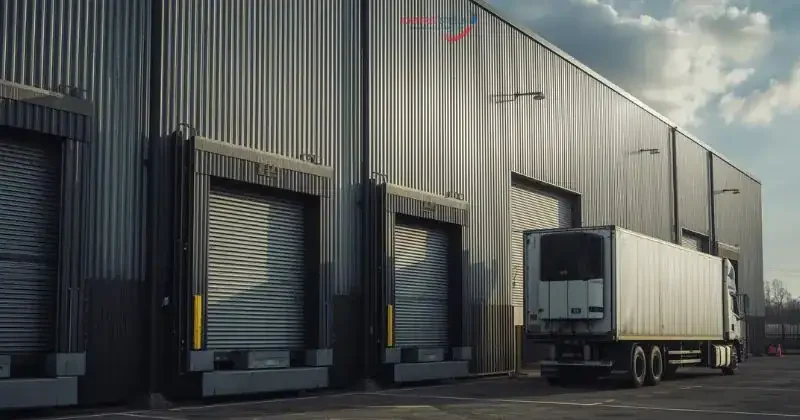
In today’s competitive industrial landscape, cold storage facilities have become indispensable assets for businesses dealing with perishable and temperature-sensitive goods. From preserving food products to safeguarding advanced pharmaceuticals, these temperature-controlled infrastructures play a crucial role in modern supply chains, logistics efficiency, and product quality assurance.
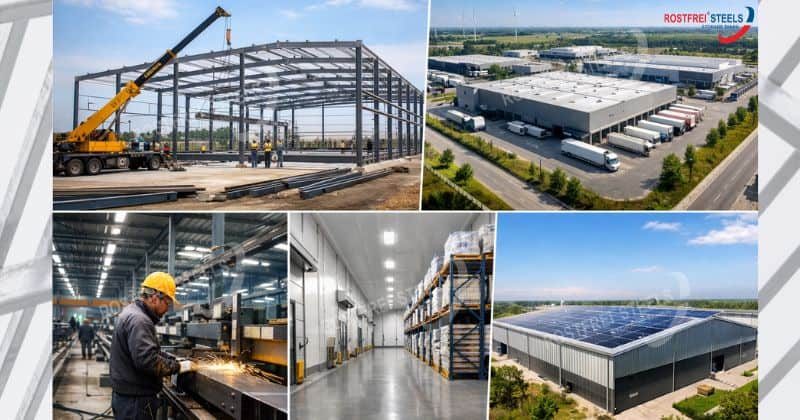
At Rostfrei Steels, we understand that durable and high-performance infrastructure is the backbone of efficient cold storage operations. The structural design whether built using PEB cladding, purlins, and frames or alternative construction systems significantly impacts insulation efficiency, maintenance costs, and long-term performance.
This comprehensive guide explores the types of cold storage facilities, industrial applications, and business benefits, helping organizations make smarter infrastructure investment decisions.
What Are Cold Storage Facilities?
A cold storage facility is a temperature-controlled warehouse or industrial building specifically designed to store perishable or sensitive goods under regulated environmental conditions. These facilities maintain precise temperature, humidity, and ventilation control to slow spoilage, degradation, and bacterial growth.
Cold storage is not merely refrigeration it is a critical component of the cold chain logistics ecosystem that supports global food supply networks, pharmaceuticals, chemicals, and agricultural products. When planning infrastructure, businesses often evaluate PEB vs RCC buildings: what to choose to balance construction speed, insulation performance, and cost efficiency.
Top Types of Cold Storage Solutions
Cold storage systems are classified based on temperature range, application, and storage function. Understanding each type helps industries choose the right facility for their operational needs.
Chilled Storage
Chilled storage is ideal for products requiring cool temperatures without freezing.
Common Uses
- Fresh fruits and vegetables
- Dairy and bakery products
- Ready-to-eat foods
- Temperature-sensitive medicines
This system helps retain freshness, taste, and texture while preventing microbial growth.
Frozen Storage
Frozen storage facilities are designed for long-term preservation by halting biological and microbial activity.
Common Uses
- Meat, poultry, and seafood
- Frozen meals and desserts
- Bulk frozen raw materials
Frozen warehouses are essential for maintaining nutritional quality, shelf life, and food safety standards.
Blast Freezers & Ultra-Low Temperature Storage
Blast freezers rapidly cool products to –30°C to –45°C, minimizing ice crystal formation and preserving structural integrity.
Best For
- Seafood export industries
- Biological samples and vaccines
- Quick-freeze packaged foods
This method ensures superior product quality and is widely used in pharmaceutical and food processing sectors.
Controlled & Modified Atmosphere Storage
These facilities regulate oxygen, carbon dioxide, and humidity levels in addition to temperature.
Ideal For
- Apples, grapes, and exotic fruits
- Floriculture and horticulture products
- High-value agricultural produce
By slowing respiration and oxidation, this storage significantly extends shelf life and reduces post-harvest losses.
Multi-Temperature Cold Storage
Multi-zone cold storage facilities allow businesses to store different product categories within a single structure.
Benefits
- Space optimization
- Reduced logistics and operational costs
- Centralized inventory control
Companies comparing PEB vs conventional buildings often prefer pre-engineered steel buildings for multi-temperature facilities due to modular expansion, insulation flexibility, and faster installation.
Key Industrial Applications of Cold Storage
Food & Beverage Industry
Cold storage warehouses preserve meat, dairy, fruits, vegetables, and processed foods by preventing spoilage and bacterial contamination throughout transportation and retail distribution.
Pharmaceutical & Healthcare Sector
Vaccines, biologics, laboratory samples, and medicines require precise temperature-controlled storage to maintain potency, safety, and regulatory compliance.
Agriculture & Horticulture
Farmers and cooperatives rely on cold storage to reduce post-harvest waste, stabilize market supply, and achieve better pricing through extended freshness.
Retail, Hospitality & Logistics
Supermarkets, restaurants, and third-party logistics providers use cold storage to manage inventory efficiently, reduce wastage, and maintain consistent product quality.
Industrial & Chemical Storage
Certain industrial chemicals and specialty materials require temperature regulation to prevent degradation, chemical reactions, or hazardous conditions.
Benefits of Investing in Industrial Cold Storage Facilities
- Preserves Product Quality
Maintaining stable temperatures prevents spoilage, moisture loss, and bacterial growth ensuring premium product standards.
- Reduces Wastage & Operational Costs
Extended shelf life minimizes product loss and lowers procurement and replacement expenses.
- Expands Market Reach
Cold storage enables exports and long-distance transportation by maintaining freshness across extended supply chains.
- Regulatory Compliance & Safety
Essential for pharmaceuticals and food industries, cold storage facilities help meet international safety, hygiene, and compliance standards.
- Scalability & Business Growth
Modern steel-based cold storage infrastructure allows easy expansion as business demand grows.
Choosing the Right Cold Storage Infrastructure
When selecting a cold storage solution, businesses should evaluate:
- Temperature stability and insulation quality
- Structural durability and energy efficiency
- Future scalability and modular expansion
- Automation, monitoring, and IoT integration
- Compliance with industry safety regulations
- Construction methodology (PEB vs RCC vs Conventional)
A well-designed cold storage facility is more than a refrigerated warehouse it is a strategic industrial investment that enhances profitability, reduces risk, and strengthens supply chain reliability.
Cold storage facilities are critical commercial assets that improve logistics efficiency, maintain product integrity, and support sustainable business growth across industries. Whether you operate in food processing, pharmaceuticals, agriculture, or logistics, selecting the right infrastructure including advanced pre-engineered steel building systems can significantly impact long-term performance.
Rostfrei Steels is committed to delivering robust, energy-efficient, and future-ready industrial infrastructure, including advanced temperature-controlled storage solutions tailored to demanding operational environments.