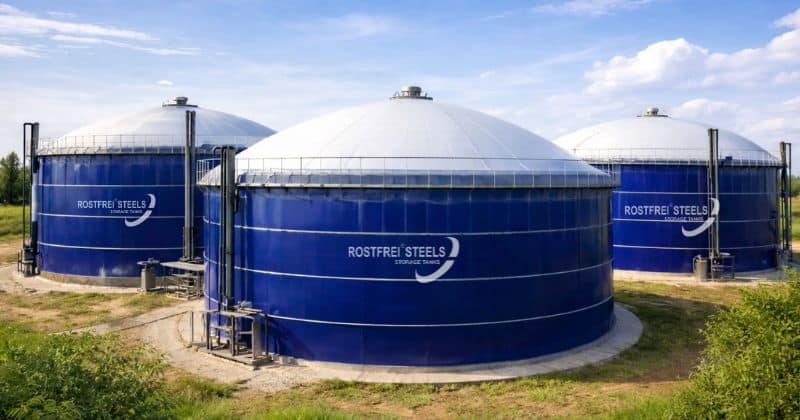
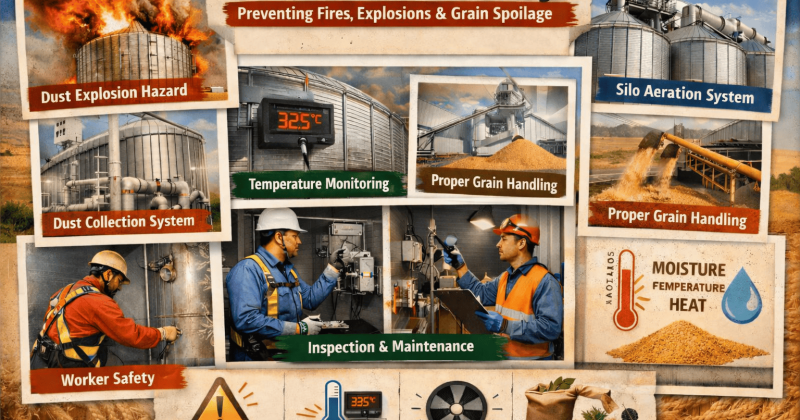
Grain silos are essential for the safe and efficient storage of crops such as wheat, rice, corn, and barley. However, improper management of a silo can lead to serious risks, including fires, dust explosions, and grain spoilage. Therefore, for farmers, grain traders, and food processing companies, maintaining proper grain silo safety systems is critical to protect both stored grain and workers. In addition, effective safety practices help reduce operational risks and financial losses.
In this guide, we explain the major safety risks in grain silos and the best practices manufacturers recommend to prevent accidents and grain loss. Furthermore, these strategies can help improve grain quality, enhance workplace safety, and ensure long-term storage efficiency.
1. Understanding the Risk of Grain Silo Explosions.
One of the most dangerous hazards in grain storage facilities is a dust explosion. Grain dust is highly combustible, and when it accumulates in confined spaces like silos, it can ignite easily.
Common causes of grain silo explosions
- Excessive grain dust accumulation
- Sparks from machinery or electrical systems
- Overheated equipment.
- Static electricity buildup
- Poor ventilation inside the silo.
When these conditions combine with oxygen in a closed environment, they can trigger powerful explosions that damage storage facilities and endanger workers.
How to reduce explosion risk?
Therefore, manufacturers recommend the following safety measures:
First, install dust collection systems to control airborne grain dust.
Additionally, use explosion vent panels to safely release pressure in case of an explosion.
Moreover, ensure proper grounding of equipment to prevent static electricity buildup.
Finally, follow regular cleaning schedules to minimize dust accumulation.
As a result, these safety measures significantly reduce the risk of combustible dust hazards.
2. Importance of Temperature Monitoring Systems
Stored grain naturally releases heat and moisture over time. As a result, if the temperature inside the silo rises too much, it can lead to grain spoilage, mold growth, or even fire hazards. Therefore, monitoring the temperature inside grain silos is extremely important for maintaining safe storage conditions.
Why Temperature Monitoring is Essential
First, it detects early signs of grain deterioration.
Additionally, it prevents hot spots inside the grain mass.
Moreover, it reduces the risk of spontaneous combustion.
Finally, it helps maintain grain quality for longer storage periods.
Today, modern grain silos are often equipped with automated temperature cables and digital monitoring systems. As a result, these systems continuously measure the internal grain temperature and alert operators when conditions become unsafe, allowing them to take corrective action quickly.
3. Aeration Systems for Moisture and Heat Control
Aeration is one of the most effective methods to keep stored grain safe and maintain its quality. Aeration systems use fans and ventilation ducts to circulate air through the grain mass.
Benefits of silo aeration systems
- Controls moisture levels
- Reduces grain temperature
- Prevents mold and insect infestation
- Improves long-term grain storage quality
Manufacturers typically recommend installing high-efficiency aeration fans and proper airflow channels to maintain uniform conditions throughout the silo.
4. Proper Grain Handling to Prevent Spoilage
Grain spoilage occurs when moisture, temperature, and biological activity are not controlled properly. Spoiled grain results in significant financial losses for farmers and grain storage operators.
Best practices for preventing grain spoilage:
Store grain at safe moisture levels
Different grains require different moisture levels for safe storage.
Grain Type | Safe Moisture Level |
Wheat | 12–13% |
Corn | 13–14% |
Rice | 12–13% |
Clean grain before storage
Additionally, removing dust, broken kernels, and impurities reduces the risk of mold and insect growth.
Regular monitoring
Inspect stored grain regularly to detect early signs of heating, moisture buildup, or pests.
5. Worker Safety in Grain Storage Facilities
Safety is not only about protecting grain but also about protecting workers who operate and maintain silo systems.
Important worker safety measures
- Use safety harnesses when entering silos
- Install proper ladders and safety cages
- Ensure lockout procedures for equipment during maintenance
- Provide training on confined space entry
Grain entrapment is a serious hazard, so workers should never enter a silo when grain is flowing.
6. Routine Grain Silo Maintenance Checklist
Regular maintenance keeps grain storage systems operating safely and efficiently. Therefore, operators must implement a consistent inspection schedule to prevent equipment failure and maintain optimal storage conditions.
Weekly Inspection Tasks
First, check aeration fans and ventilation systems to maintain proper airflow.
Next, inspect electrical wiring and motors and look for any signs of damage or overheating.
Additionally, remove accumulated grain dust around equipment to reduce fire and explosion risks.
Finally, monitor temperature and moisture readings to identify early signs of spoilage.
Annual Maintenance Tasks
In addition, inspect silo walls and the roof to identify any structural damage.
Furthermore, clean internal grain residues to prevent contamination and pest infestation.
Moreover, calibrate temperature monitoring sensors to maintain accurate readings.
Lastly, check the corrosion protection on steel panels to preserve the durability of the silo structure.
Overall, proper maintenance extends the lifespan of the silo and ensures safe grain storage for many years.
Conclusion
Grain silo safety plays a critical role in modern agricultural storage operations. Therefore, farmers and grain storage companies should implement dust control systems, temperature monitoring, aeration equipment, and regular maintenance to significantly reduce the risks of fires, explosions, and grain spoilage.
Furthermore, when selecting a grain silo manufacturer, businesses should choose systems with advanced safety features and reliable monitoring technologies. As a result, investing in the right storage solution helps maintain long-term grain quality, improves operational safety, and reduces financial losses.