India’s renewable energy transition is entering a powerful new phase with the rapid expansion of the Compressed Biogas (CBG) in Energy sector. As the country accelerates its waste-to-energy goals and clean fuel adoption, the demand for reliable biogas infrastructure has never been higher.
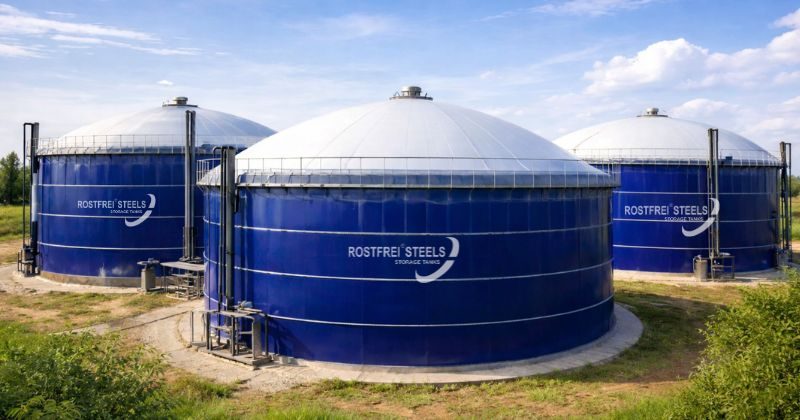
At the heart of every successful CBG project lies one critical component: the anaerobic digester / fermenter tank. And today, Glass-Fused-to-Steel (GFS) Biogas digester tanks are emerging as the preferred solution for EPC contractors, project developers, and bioenergy investors across India.
This article explores why high-performance GFS Biogas digester tanks are strategically important for national and international CBG expansion and how they help industry stakeholders deliver durable, profitable, and future-ready projects.
India’s Expanding CBG Market: A Major Renewable Opportunity
India generates millions of tons of agricultural residue, municipal solid waste, and animal manure every year. Converting this organic waste into renewable fuel through anaerobic digestion creates:
- Clean transportation fuel (CBG)
- Reduced landfill burden
- Lower greenhouse gas emissions
- Additional income streams for farmers and municipalities
With increasing government focus on biofuels, sustainable waste management, and carbon reduction, hundreds of CBG plants are being planned and commissioned across the country.
However, the long-term success of these projects depends heavily on robust digester / fermenter infrastructure.
Why Digester Tank Quality Determines CBG Plant Success?
In a CBG plant, the anaerobic digester tank is the core reactor where organic waste is converted into biogas. Any compromise in tank performance can result in:
- Gas leakage and methane loss
- Structural cracks and corrosion
- Increased maintenance costs
- Project downtime
- Reduced return on investment (ROI)
Traditional concrete or hand painted steel tanks often struggle in aggressive feeds or slurry applications & gasses, where hydrogen sulfide (H₂S), organic acids, and moisture cause severe corrosion.
This is where Glass-Fused-to-Steel (GFS) Biogas digester tanks offer a strategic advantage.
What Are Glass-Fused-to-Steel (GFS) Digester Tanks?
Glass-Fused-to-Steel (GFS) technology involves fusing a layer of glass enamel to steel at high temperatures (approx. 800–900°C). This process creates a strong chemical bond that combines:
- The strength and flexibility of steel
- The corrosion resistance of glass
The result is a high-performance, corrosion-resistant, modular biogas digester tank designed specifically for demanding applications like in CBG plants.
Strategic Advantages of GFS Digester Tanks in CBG Projects
1. Superior Corrosion Resistance
Biogas environments are highly corrosive due to:
- Hydrogen sulfide (H₂S)
- Organic acids
- High humidity
- Temperature variations
GFS tanks provide exceptional resistance to chemical and biological corrosion, ensuring long service life even in aggressive digestion conditions.
2. Decades of Service Life (30+ Years of design life as per AWWA D code)
A high-quality GFS digester tank can operate for decades with minimal structural degradation. This:
- Reduces lifecycle costs
- Improves project bankability
- Increases investor confidence
For large-scale CBG projects, durability directly impacts financial performance.
3. Faster Installation & Modular Design
Unlike cast-in-place concrete tanks, GFS tanks are:
- Factory-engineered
- Delivered in prefabricated panels
- Bolted together on site
This significantly reduces construction time, helping EPCs, OEMs & Fire contractors:
- Meet strict project timelines
- Avoid weather-related delays
- Accelerate plant commissioning
4. Gas Leak Proof Construction for Methane Retention
Methane is the primary energy component in biogas. Even small leaks can lead to:
- Energy loss
- Environmental compliance risks
- Reduced revenue
GFS tanks offer reliable sealing systems that support high methane capture efficiency – critical for profitable CBG operations.
5. Lower Lifecycle Cost Compared to Concrete Tanks
While initial capital cost is important, smart developers evaluate total cost of ownership.
GFS tanks reduce:
- Crack repair costs
- Recoating expenses
- Corrosion damage repairs
- Structural rehabilitation
Over 30+ years, this results in substantial savings.
Why EPC Contractors Prefer High-Performance GFS Tanks
For EPC contractors and plant integrators, infrastructure reliability directly impacts reputation and profitability.
High-performance GFS digester tanks offer:
- Customized engineering
- Faster installation timelines
- Reduced post-commissioning issues
- Easier scalability for future expansion
By integrating advanced GFS tank systems, contractors can deliver projects that meet performance guarantees and long-term durability expectations.
Strengthening India’s CBG Ecosystem Through Reliable Infrastructure
India’s CBG sector is not just about fuel production – it is about building a sustainable bioenergy ecosystem. Reliable digester infrastructure ensures:
- Stable gas production
- Reduced operational risk
- Compliance with environmental standards
- Sustainable waste-to-energy conversion
High-performance GFS digester tanks act as the backbone of this infrastructure.
A Strategic Opportunity for Industry Stakeholders
As India moves toward large-scale CBG adoption, the demand for:
- Industrial biogas digesters
- Advanced anaerobic digester tanks
- Corrosion-resistant storage systems
- Modular bioenergy infrastructure
Companies that invest in advanced GFS tank technology position themselves as long-term partners in India’s renewable energy journey.
Conclusion: Building the Future of CBG with High-Performance GFS Digester Tanks
India’s CBG sector expansion presents a transformative opportunity in renewable energy, waste management, and sustainable fuel production.
However, the long-term success of these projects depends on one key factor – durable, corrosion-resistant, high-performance digester infrastructure.
Glass-Fused-to-Steel (GFS) digester tanks offer:
- Superior corrosion protection
- Long operational lifespan
- Faster project execution
- Reduced lifecycle cost
- Improved methane retention
For EPC companies, fire contractors, developers, and investors, choosing the right digester tank solution is not just a technical decision it, is a strategic one.Bottom of Form