Grain silos are the backbone of bulk grain storage for industries such as agriculture, food processing, and grain trading. They are specifically designed to store wheat, rice, maize, pulses, and other food grains safely for long durations. However, many businesses face hidden losses due to grain contamination, which directly affects quality, profitability, and market reputation.
Contaminated grain can result in spoilage, operational delays, regulatory penalties, and customer dissatisfaction. Investing in a high-quality, well-engineered grain silo system is essential to protect stored grain and maintain business efficiency.
Rostfrei Steels’ Grain Silos, equipped with advanced aeration, roof vent, and temperature control systems, are built to prevent contamination, minimize spoilage, and maximize return on investment (ROI).
This article explains why contamination happens in grain silos only, its business impact, and how Rostfrei Steels provides a reliable solution.
Explains why contamination happens in grain silos only, its business impact and how Rostfrei steels provides a reliable solutions.
Why contamination happens?
Common Causes of Grain Contamination in Silos
Grain contamination can occur in any silo if proper design, maintenance, and environmental control are not maintained. The most common causes include:
a. Poor Aeration & Ventilation
Insufficient airflow is one of the leading causes of grain spoilage. Without proper aeration, moisture pockets and heat build-up occur, creating ideal conditions for mold, fungi, and bacterial growth. Grains are highly sensitive to trapped humidity and temperature.
b. Moisture & Humidity Entry
Leaks, condensation, and high environmental humidity are major contributors to spoilage. Even a small amount of water can damage large quantities of stored grain. Low-quality silos often fail to prevent water ingress due to poor sealing or corrosion over time.
c. Temperature Fluctuations
Rapid or extreme temperature changes create condensation inside the silo. This internal moisture encourages insect activity, microbial growth, and grain deterioration. d. Pest Infestation
Rodents, insects, and birds can easily enter poorly sealed silos. Pest contamination leads not only to quantity loss but also food safety and compliance issues.
d. Poor Maintenance & Residue Buildup
Old grain dust or leftover stock from previous batches can mix with fresh grain, increasing contamination risks. Silos that are difficult to clean often experience recurring quality problems.
The Cost of Grain Contamination to Your Business
Impact | Details |
Financial Loss | Spoiled grain leads to direct monetary loss. Even 4–5% spoilage in a large silo can cost lakhs annually. |
Operational Delays | Contaminated grain can halt cleaning, grading, or dispatch schedules. |
Quality Issues | Poor grain quality results in rejected shipments and customer complaints. |
Regulatory Risks | Food grain storage standards are strict. Non-compliance can result in fines or legal issues. |
Reputation Damage | Repeated quality failures reduce trust among buyers and distributors. |
Investing in a proper grain-specific silo system is far more economical than facing repeated spoilage losses.
For deeper understanding on modern storage trends, read:
How Rostfrei Steels Grain Silos Prevent Contamination?
With 21+ years of expertise, Rostfrei Steels designs and manufactures silos exclusively optimized for grain protection, storage efficiency, and long-term durability.
a. High-Quality Steel & Corrosion Resistance
- Made from premium galvanised steel, Zincalume sheets, or Magnelis steel
- Prevents rust formation and water entry
- Designed for 35+ years lifespan with minimal maintenance
b. Advanced Aeration & Roof Vent Systems
- Maintains continuous airflow
- Prevents moisture pockets and hot spots
- Reduces mold and insect growth
- Ensures uniform internal temperature for grains
c. Temperature Control Features
- Helps maintain ideal grain storage temperature
- Minimizes condensation and spoilage
- Protects grain from seasonal weather variations
d. Modular Bolted Design
- Easier to assemble, clean, and maintain compared to welded structures
- Allows complete removal of residue between batches
- Enables quick expansion without structural compromise
To understand structural differences, read: Difference Between Flat and Hopper Bottom Silos
e. Pest-Proof & Secure Structure
- Tight sealing prevents entry of rodents, birds, and insects
- Safety features such as ladders, handrails, and catwalks for safe operation
Key Benefit: Rostfrei Steels grain silos function as complete grain protection systems, not just storage containers.
Practical Benefits / Case Examples
Case Example 1
A large grain storage business was facing 4–5% grain spoilage in conventional silos due to poor ventilation. After installing Rostfrei Steels grain silos with advanced aeration and roof vents, spoilage became almost negligible (near zero), leading to major annual savings.
Case Example 2
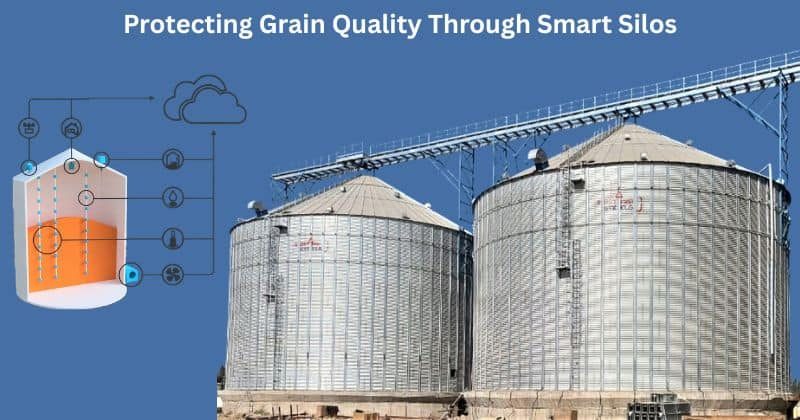
A grain trading company upgraded to Rostfrei modular grain silos with temperature monitoring. Contamination incidents reduced drastically, grain quality improved, and operations became smoother.
Takeaway: Investing in high-quality grain silos is not just about storage, it is about protecting grain quality, profitability, and business reputation.
Conclusion
Grain contamination is a serious challenge for storage-dependent businesses. Poor ventilation, moisture entry, temperature fluctuations, pests, and residue buildup can quickly lead to spoilage and financial loss.
Rostfrei Steels Grain Silos are engineered to eliminate these risks through:
- High-grade corrosion-resistant steel
- Advanced aeration and roof vent systems
- Temperature control features
- Modular bolted design for easy cleaning
- Secure, pest-proof construction
By investing in Rostfrei Steels grain silos, businesses can ensure:
- Safe and high-quality grain storage
- Near-zero spoilage levels
- Reduced operational downtime
- Long-term durability and strong ROI
In bulk grain storage, prevention is always more profitable than recovery.